
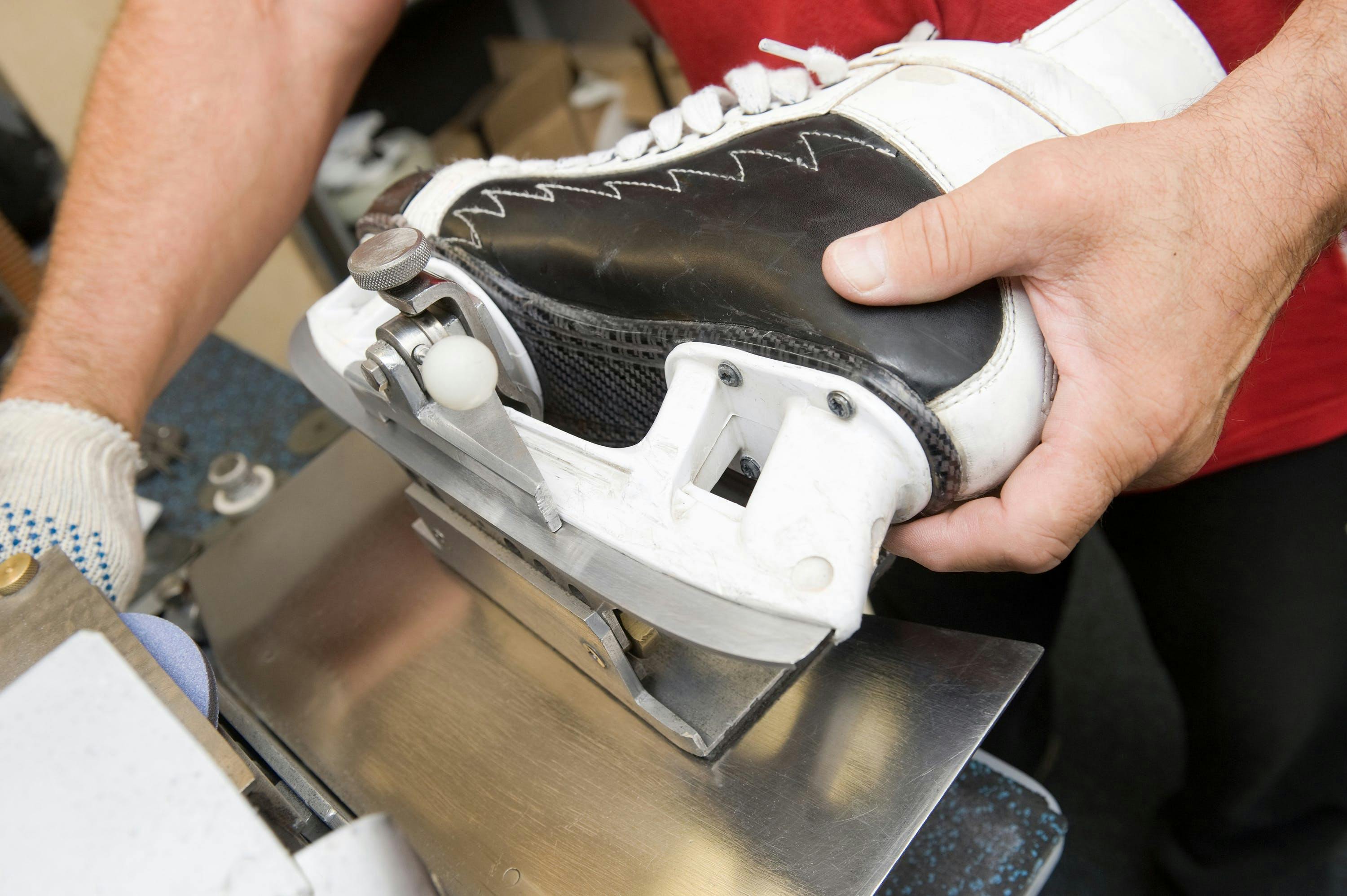
Keeping your skates sharp can help you stay sharp on the ice, but there are a few things you should know before you head over to the sharpening jig. Skate sharpening isn’t overly complicated, but there’s definitely a right way to do it, as well as a number of wrong ways.
To make sure your skates are ready to go and don’t pose any danger to you on the ice, take a look at these skate sharpening tips and tricks.
The Importance of Skate Sharpening
There are many obvious reasons you want to keep your skates nice and sharp, but there are also some you may not even realize are crucial to optimizing your performance and reducing the risk of accidents and injury.
Gripping the Ice
A nice sharp pair of skates will grab the ice and give you greater control when stopping and starting. Conversely, dull blades will almost always cause you to perform worse.
More Efficient Skating
Sharp skates require less energy to get you where you want to go. Dull skates can bog you down, making you slower and causing you to become tired quickly.
Safer
Greater maneuverability means greater control when you’re on the ice. Sharp skates also make stopping quickly easier so you can avoid accidents and injuries.
Three Key Skate Sharpening Tips
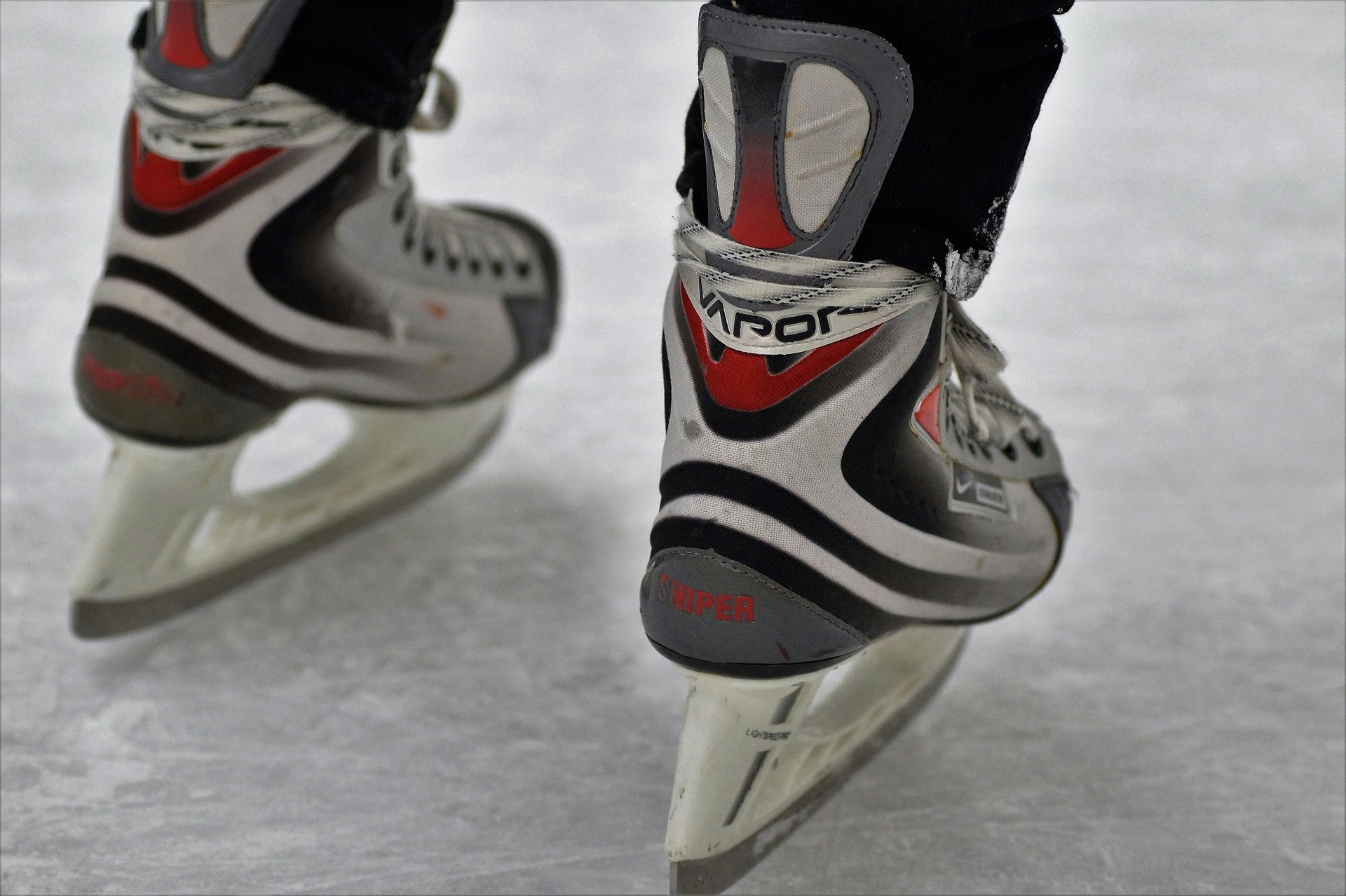
Here are a few key skate sharpening tips to keep in mind the next time your blades start to get dull and you feel sluggish out on the ice.
1. Selecting Your Radius
This is perhaps the most important of all skate sharpening tips. Choosing the right radius for the hollow of your blade is crucial. But, what determines the “right” one will depend on your weight and what you’re looking to get out of your skates.
A lighter skater needs a thinner radius, which will range between 3/8” and 5/8”, while a heavier skater typically requires something in the range of 5/8” to 1”.
A large radius will give you less grip but greater maneuverability, while a small radius will offer greater grip, more edge, and the ability to hold a tighter turn. When determining what radius works best for you, you’ll want to consider your size, weight, and the kind of skating you’re hoping to do.
2. Avoiding Improper Alignment
Once you’ve selected the best radius for your skates, it’s time to get sharpening.
Keep in mind that this is where user error can come into play. If the sharpening jig isn’t properly aligned with the blade of your skate, it can result in one edge being higher than the other, which can cause all kinds of issues out on the ice.
Bad alignment will reveal itself by causing your skate to slip out when you turn or stop in one direction but not the other. If this happens, check the blade to see if your edges are perfectly even. If you can’t spot it yourself, try balancing something flat on the blade and look for it to tilt.
The best way to avoid improper alignment is to have your blades professionally sharpened.
3. Getting the Right Blade Profile
The blade profile is also referred to as the “rocker,” and it’s important to know what makes a good one. The middle of the blade should be fairly flat, while the tip and the tail should curve upwards.
The blade’s profile is viewed as if it were part of a circle and is therefore measured in feet. Common sizes of that imaginary circle’s radius are nine, 11, and 13 feet.
This may all sound like unnecessary geometry, but all you really need to know is what those measurements imply.
A shorter radius (around nine feet) means the tip and tail won’t touch the ice as much, promoting maneuverability and agility. On the flip side, a longer radius (up to 13 feet) means the tip and tail make more contact with the ice, thus offering greater speed.
How Often Should You Sharpen Your Skates?
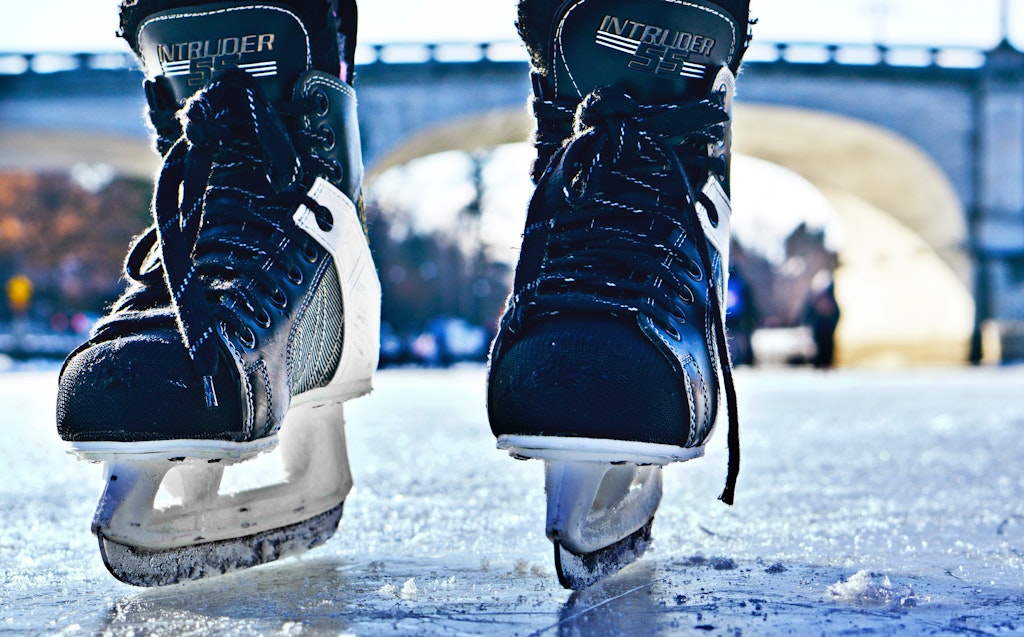
Knowing that a nice sharp skate offers so many advantages may lead you to believe that constant sharpening is necessary, but that isn’t actually the case.
In fact, sharpening your blades too often will lead to them wearing out faster. Ultimately, you just want to make sure that the blades never get dull to the point of hindering your ability to skate.
Often, hockey players will sharpen based on how much time they spend on the ice. For example, if you typically skate twice a week, you’ll probably want to sharpen your blades monthly.
You can use that time frame as a reference, but make sure you adjust accordingly. If you feel like once a month isn’t enough, by all means, sharpen more often; if you think it’s overkill, sharpen less.
How to Tell When It’s Time to Sharpen Your Blades
Before you start putting these skate sharpening tips into practice, you should confirm that your blades are dull enough to require sharpening in the first place. Here’s how.
Look at the Blade Under Light
If you examine the blade beneath a bright light and find that the edge is reflective, it’s probably dull enough to need sharpening.
Run a Finger Along the Edge
Run your finger along the blade carefully to gauge how sharp it is. This will also give you a chance to catch any nicks or other imperfections that can’t be spotted with the naked eye.
Go for a Skate
When your blades are sufficiently dull, they’ll fail to grip the ice like they once did, and maneuvering will become much more difficult.
Sharp Blades Enhance Performance
With these simple skate sharpening tips, you should be able to maintain a pair of skates that will help you play your best. If you’re new to sharpening skates, it’s always a good idea to learn from someone with plenty of experience, so never be afraid to ask for advice.
Once your blades are ready for the ice, consider signing up for Shinny USA recreational hockey league for adults 21 and over. Contact us today for more information on our locations and playtimes.
28 responses to “Skate Sharpening Tips and Tricks to Keep Your Skates in Top Condition”
buy androxal generic medications
buy cheap androxal cheap sale
discount rifaximin cheap with prescription
ordering rifaximin non prescription online
delivered staxyn
how to buy staxyn cost australia
ordering avodart australia price
how to buy avodart cheap store
medicament kamagra pilule nist prescrire
acheter kamagra pilule nist prescrire
discount enclomiphene cost australia
enclomiphene online no perscription
buy cheap flexeril cyclobenzaprine purchase generic
get flexeril cyclobenzaprine france where to buy
purchase dutasteride generic when available
order dutasteride cost australia
gabapentin at lower price
buy cheap gabapentin generic london
buy fildena Los Angeles California
como se usa el fildena para mujeres
itraconazole cod no prescription required
itraconazole online without prescription
buy xifaxan cheap europe
cheap xifaxan cost uk
kamagra poštovní objednávka austrálie
kamagra přes noc bez lékařského předpisu
what is cenforce 100mg
what is cenforce 100mg
sildenafil medication dosage
sildenafil medication dosage
xenical sans prescription
xenical sans prescription
does proscar lower psa levels
does proscar lower psa levels
what pregnancy class is flagyl
what pregnancy class is flagyl
tadalafil dosage bodybuilding
tadalafil dosage bodybuilding
bupropion hcl sr 100mg tablet
bupropion hcl sr 100mg tablet
orlistat colombia
orlistat colombia
ketoconazole for pityriasis versicolor
ketoconazole for pityriasis versicolor
ketorolac tromethamine reference page
ketorolac tromethamine reference page
toradol pain relief duration
toradol pain relief duration
ivermectin usage overview
ivermectin usage overview
ivermectin overview FAQ
ivermectin overview FAQ
sildenafil safety markers
sildenafil safety markers
avanafil mechanism technical notes
avanafil mechanism technical notes